
Once you try homemade sauce, you'll never go back to store-bought!


There are so many foods that bring to mind beautiful Italy. Pizza, pasta, meatballs, parmesan cheese, and of course marinara sauce. Think about some of your favorite Italian dishes. Do any of them require this delicious red sauce? Chances are good that they do! And because so many recipes require a rich, flavorful marinara sauce, it’s incredibly important to make sure you use a good one! Our marinara sauce that anyone can make is so simple, yet so delicious.
Table of Contents
The Importance of Sauces in Italian Cuisine and Beyond

Italian food boasts many different sauces and condiments. You can find recipes that are vegetable-based, animal-based, dairy-based, and more! As in every culinary culture, sauces are at the base of the flavor pyramid, made with elements that have been passed down throughout the centuries.
Italian cuisine follows simple, homemade guidelines. Sauces consist of minimal ingredients and require just a few steps to create them. They are largely associated with pasta, such as marinara, pesto, alfredo, and more. But in reality, their use goes far beyond that, covering the sphere of appetizer and main course in hundreds of recipes.
Marinara Sauce in Italian Cuisine
In most of the world-famous and recognized Italian recipes, marinara sauce is the star. Spaghetti and meatballs, eggplant or chicken parmigiana, ziti, lasagna, and even pizza are all dishes that need marinara sauce. In short, used and known by everyone, it has become a real must-have item in the refrigerators of Italian food lovers.
In Italy, however, no one talks about marinara sauce. On the Italian peninsula you will practically never hear the word “marinara sauce” to explain today’s recipe. That’s because in our country we simply call it “sugo” (sauce). The only reason you would read “marinara” on a restaurant menu in Italy will be to indicate a pizza (pizza marinara, precisely). How is it made? Simple: tomato sauce and garlic!

The Tomato: One of America’s Most Important “Gifts” to Europe
Playbills, aprons, and restaurant signs, everything related to “Italian cuisine” always seems to be accompanied by an image of a tomato. However, this does not mean that Mediterranean cuisine immediately embraced it since its first appearance.
When the tomato arrived on the coast of Spain in 1540, the plant was most often used for ornamental purposes given the lack of knowledge about its nature. When it first came to Italy, it was used as a healing plant. But thanks to mercantile exchanges with the Spanish, Sicily was the first to introduce the fruit into its cookbooks.
The first trace of our tomato sauce is found in a recipe book from the late 17th century. In this, Neapolitan cooks called it “Spanish-style tomato sauce,” because of the merchants who introduced it to Italy.
Italian Cuisine in America
In any country where the traditional cuisine of another place is replicated, we always encounter the phenomenon of cultural adaptation. This also happens in the United States, where restaurants slightly modify Italian recipes to be more palatable for the American market.
The particularity of the Italian-American case, however, is that thanks to the arrival of so many immigrants to the shores of the United States in the 1900s, the culture of Italian food immediately took deep root in everyone’s daily life.
In fact, it is not correct to talk about Italian food in America, but rather about Italian-American cuisine. The union of the poor, homegrown traditions of immigrants collided with a totally different market. By the time globalization was still a nonexistent term, local products remained strictly that, without making significant export trips.
Recipes of Italian-American Cuisine
With the emergence of the Italian community in America, a new way of understanding cuisine was born. Let’s look at some of the recipes that are considered traditional to the Italian peninsula from the American viewpoint, but are actually from the union of Mediterranean culture and more “Yankee” tastes.
Marinara Sauce: Our protagonist today is the most important Italian-American recipe. This one combines the Italian tradition of tomato sauce with the American versatility of using any kind of sauce as a condiment for various foods, even as a dip for fried foods and snacks.
Spaghetti and Meatballs: Meatballs are very important in the culture of southern Italy, which is why they were expatriated as a calling card by immigrants traveling to America. The birth, however, of the recipe with pasta has nothing to do with Italian cuisine. It is a fusion of two Italian flags: pasta and meatballs. A way for small Italian American stores to set a traditional Mediterranean tone and attract U.S. workers on their lunch break.
Chicken Parmesan: Italy’s famous “parmigiana” is a kind of vegetable-based lasagna. Made with fried eggplant and baked with tomato sauce, mozzarella, parmesan, and basil. The American tendency to enrich every food with protein probably led to that decision. What’s better than eggplant parmesan? Chicken parmesan!
Carbonara: Well yes, despite the fact that many Italians are indignant towards Americans who try to reproduce carbonara, crying heresy at every modified step, carbonara would not exist without the presence of Americans. It’s a long story but to keep it simple, carbonara was invented in Italy to honor the presence of the American army in Europe during World War II. So thank you, America!
How to Choose the Best Ingredients

When it comes to cooking, we often forget the importance of raw materials and how to handle them. The food industry has extended the shelf life of convenience foods, leading us to prefer canned sauces and condiments rather than preparing everything from scratch. But taking the time to find the perfect ingredients is not time wasted. It will make your meals taste more authentic and so much tastier. Here are some tips on how to choose the right ingredients for this recipe:
- When choosing canned tomatoes, if you do not opt for fresh ones, always check that they were picked and stored on the same day. The requirement for truthful labels is very strict, so trust it.
- Do not be frightened by the presence of “citric acid” in canned tomatoes. Be careful, however, that it never exceeds 2 percent: it would mean that the tomatoes were picked too prematurely, hence lower quality.
- When you have to buy extra virgin olive oil, check out a local farmer’s market. Supermarket quality is not necessarily lower, but the products of small farmers are more valued.
- Keep in mind that not only Italy produces GOOD extra virgin olive oil. Locally made products can be just as good, if not better!
Let’s Make Some Marinara Sauce

Making this delicious marinara sauce is so easy that anyone can do it (Hence the name “Marinara Sauce Anyone Can Make”!) Just follow the simple instructions below to get the best marinara sauce you’ve ever tasted!
Begin by finely chopping the yellow onion and garlic cloves and adding them to a large saucepan with two tablespoons of extra virgin olive oil. Sauté on low heat for one minute before adding the basil stems. This will give the sauce a more intense fragrance!
After a few minutes, add the sugar and let your base take on a nice golden color, being careful not to burn it. Once golden, add the previously crushed tomatoes. (Note: Never blend the tomatoes because you will break the seeds of the tomatoes which will release too much acidity into the dish.) Next, add the salt and fresh basil leaves, cover with a lid, and let it simmer for at least 40 minutes.
After this time has passed, increase the heat to high and cook for five more minutes with the lid half-open. Don’t worry if the sauce sticks slightly to the bottom– this step will help the tomato to release its best aspect: the umami flavor.
Finally, turn off the heat, add a tablespoon of extra virgin olive oil, and set the sauce aside to cool without the lid on. The scent of the raw oil will leave a sour and bitter note that will complement the flavor of the sauce perfectly.
And there you have it! The easiest marinara sauce that anyone can make– ready for busy weeknights, family dinners, and more!
How to Make it Higher in Protein
Marinara is loaded with nutrients but is relatively low in protein. Luckily, we can fix that!
Here are two slightly different tips on how to give our delicious marinara sauce a protein boost:
- You can use the sauce to accompany your favorite legumes. For example, if you use pre-cooked chickpeas or lentils, you can make wonderful soups. Take your legumes, add them to the pan and cover with marinara sauce, add half a cup of water, and let it boil for 10 minutes. The natural starches in the boiling legumes will help the sauce bind, creating a velvety and delicious effect. You can serve with a drizzle of extra virgin olive oil or a nice grating of parmesan cheese. The choice is yours.
- If, on the other hand, you want to give a protein addition to the marinara itself, without accompanying it with anything, follow our advice. Blend a cup of pre-cooked white beans with a dash of hot water, and season with salt and pepper (to your liking). Add the mashed beans to the sauce while it is cooking, about halfway through. Or, add some cooked ground beef to the sauce halfway through the cooking process. I assure you that, in addition to making the sauce perfect for your high-protein diet, you will be blown away by its flavor.
How to Serve Marinara Sauce Anyone Can Make
Versatility is marinara’s strength. In fact, it lends itself to many accompaniments and combinations. You can use it as a pasta sauce with a tiny bit (or a lot) of parmesan cheese to make you feel embraced by a warm taste of home. It would be delightful in baked ziti, lasagna, ravioli, or of course, spaghetti! You can use it as a pizza sauce on a homemade pizza! You can even enjoy this sauce as part of an appetizer during cocktail hour with friends! It makes a great dip for mozzarella sticks! But marinara sauce can also be used in soups, with grilled cheese, and more!
How to Store the Spaghetti Sauce
Once it has cooled, you can safely leave it in the refrigerator for up to 3 days. If you want it to last longer, you can freeze it for up to 6 months. I do not recommend using vacuum jars if the tomato you used is not fresh as you will have an alteration in flavors once you open the jar again. Instead, store the sauce in a freezer bag, seal it tightly, and place it in the fridge or freezer. If frozen, allow it to thaw at room temperature for a few hours.
If you used fresh tomatoes to make this marinara sauce, you can store it in vacuum-sealed jars. Here’s how to do it:
- The process should be done while the sauce is still hot.
- Grab your jars with vacuum-seal caps and sterilize them in boiling water for a couple of minutes.
- Pour the hot marinara sauce into the jars, seal them tightly, and turn them upside down until they cool.
- Once they have cooled, you will have vacuum-packed jars of marinara sauce. Be sure to label them with the date of preparation.
- Leave them in a cool, dry place (like a pantry) and enjoy the recipe up to 8 months later.
Keep in mind that homemade marinara sauce makes a fantastic homemade gift! Add a nice-looking label to the jar and give it as a housewarming, thank you, or even Christmas gift!
Frequently Asked Questions

If you’ve never made your own marinara sauce before, chances are good that you have a few questions. Here are answers to the most commonly asked questions.
Can I make marinara with fresh tomatoes?
Yes, absolutely. You have to make sure you have tomatoes that are in season. If you have a garden where you can grow them, that’s better, but even buying them at the right time of year will guarantee great flavor. Take your time and follow the next steps:
Carve your tomatoes with a slight “x” in the back and boil them in salted water for one minute. After that, cool them under running water and remove the skin. Cut them into wedges and remove the seed part with a spoon. The pulp should be all that remains, which you are going to cook according to the same procedure as in the recipe below.
Is homemade marinara sauce healthier than store-bought?
Absolutely. The simplicity of the homemade product is the strength of this recipe.
In terms of caloric and nutritional intake, the choice of making it at home is always the best one. The presence of some preservatives in ready-made products is not the healthiest choice. Plus, products on supermarket shelves are often full of saturated fats, which are definitely not good for your health.
Where does the name “marinara” come from?
The term “marinara” means “of the sea”. It originated among the fishermen of southern Italy, who enriched their fish dishes with tomato sauce. They used to do it for two main reasons: It would either match the sour taste of the salty catch or it would enrich their meals when the catch was not rich enough.
Is homemade pasta sauce less expensive?
The added positive note of making your own sauce from scratch at home is that it is economical. Regular sauces are pricey enough, but when you choose products on supermarket shelves with terms like “organic” or “100% natural” the price can be even higher. Therefore, when you’re considering trying out recipes that do not involve long preparation time or expensive tools, I recommend making the extra effort to prepare them from scratch. Assuming you have the time and desire, of course.
Are there other seasonings that I can add to this marinara recipe?
You can add your favorite spices but be careful not to overdo it with strong herbs such as tarragon (which may give a more “balsamic” flavor.) This would make a marinara-based dish heavier and too difficult to match with other courses in your meal.
You can add some dried oregano, thyme, or parsley to the sauce for extra flavor (fresh herbs would work, too!) Crushed red pepper flakes or even black pepper would add a little kick. Mushrooms would also make a nice addition to the texture of the sauce.
That said, making it as traditional as possible and sticking with just a few ingredients like the classic Italian recipe will result in the lightest, tastiest marinara sauce.
Marinara Sauce Anyone Can Make
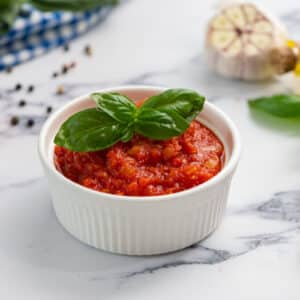
Ingredients
- 1 yellow onion medium
- 3 garlic cloves
- 3 tablespoon extra virgin olive oil divided
- 1 basil sprig large, always use fresh basil with marinara sauce, separate leaves from stems
- 1/2 tablespoon pure cane sugar
- 28 ounces whole peeled tomatoes crushed, recommend San Marzano one (D.O.P. certified even better. See notes below)
- 1 teaspoon table salt use sea salt, absolutely not Himalayan
Instructions
- Finely chop the onion and garlic and add them to a large saucepan with 2 tablespoons of extra virgin olive oil.
- Start sautéing on a gentle flame (low heat) and add the basil stems, this will give a more intense fragrance.
- After a few minutes, add the sugar and let your base take on a nice golden color, being careful not to burn it.Then add the previously crushed tomatoes. Never blend the tomatoes, because with a blender you will break the seeds of the tomatoes, going to release too much acidity in the dish.
- Add the salt and basil leaves, cover with a lid and cook for at least 40 minutes.After this time has passed, raise the heat to maximum and cook for 5 minutes with the lid half-open. Don't worry if the sauce sticks slightly to the bottom, this step will help the tomato to release its best aspect: the umami flavor.
- Turn off the heat, remove the lid, add a tablespoon of extra virgin olive oil, and set the sauce aside to cool.The scent of the raw oil will leave a sour and bitter note that will complement the flavor of the sauce.
Notes
- D.O.P. (Designation of Origin Protected) will ensure the product is produced, processed, and packaged in a specific geographical region. For example, San Marzano tomatoes comes from a region of Italy, specifically San Marzano Sul Sarno, which is near Naples. The taste is unbeatable!
- The serving size is calculated for a plate of pasta, the classic “pasta al pomodoro” or pasta marinara.
- You can serve the sauce with pasta, dress your pizza, or simply as a dip for your appetizers.
Nutrition Information
Have you made this recipe?
Tag @skinnyms on Instagram or hashtag it #skinnyms
If you enjoyed this Marinara Sauce Anyone Can Make, you might also like to try:
Also, be sure to let us know what you thought of it in the comment section! And follow us on Facebook, Pinterest, and Instagram so you never miss out on a new delicious recipe!


